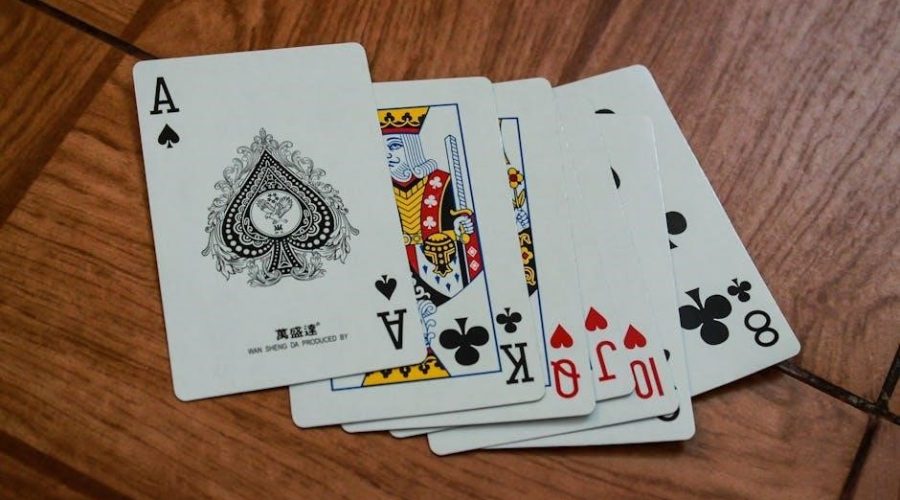
Learning how to play card games is made easier with clear instructions, fostering enjoyment for popular games like Poker, Bridge, and Canasta.
Many card games share a common rule – matching the suit of the first card played, enhancing understanding through regular play.
Websites offer rules for numerous card games, constantly evolving with suggestions and updates, ensuring accessibility for all players.
Why Clear Instructions Matter
Ambiguity in card game rules can quickly derail an enjoyable experience, leading to frustration and disputes among players. Precisely defined instructions are paramount for fostering fair play and ensuring everyone understands the objectives and permissible actions.
Without clarity, the nuances of a game – like betting rounds in Poker or meld combinations in Canasta – become sources of confusion, hindering strategic decision-making. Well-written instructions empower players to fully engage with the game’s complexities, appreciating its depth and challenge.
Furthermore, accessible instructions encourage inclusivity, welcoming newcomers and allowing them to quickly learn and participate. This is especially crucial for games with intricate rulesets, like Bridge, where understanding the bidding process is essential. Clear guidance transforms a potentially daunting experience into an inviting one, promoting a positive social interaction around the table.
The Evolution of Card Games
Historically, card games evolved from earlier playing card traditions, initially relying on oral transmission of rules – a method prone to variation and misinterpretation. Early card sets sometimes included rule summaries, but standardization was a gradual process.
The advent of printed rulebooks in the 19th and 20th centuries marked a significant shift, providing consistent guidelines for popular games. This coincided with the rise of commercial card production and the increasing popularity of games like Poker and Bridge.
Today, the digital age has revolutionized access to card game instructions. Websites now offer comprehensive guides for countless games, constantly updated with suggestions and clarifications. Even the presentation of rules is evolving, with some considering embedding them directly onto the cards themselves, blending art and instruction for a more intuitive experience.

Essential Card Game Terminology
Understanding key terms—suits, ranks, and actions—is crucial for grasping card game instructions and confidently participating in gameplay, enhancing the overall experience.
Understanding Suits and Ranks
Card games universally employ four suits: hearts, diamonds, clubs, and spades, each holding distinct symbolic value and often influencing gameplay strategies. Within each suit, cards are ranked, typically from two to ten, followed by Jack, Queen, King, and Ace.
The Ace’s value can vary; sometimes it’s the highest card, other times the lowest, depending on the specific game’s rules. Recognizing these ranks is fundamental to evaluating hand strength and predicting opponent moves.
A common rule across many games involves playing a card of the same suit as the initial card, demanding players identify and utilize their suit holdings effectively. Mastering suit and rank recognition is the cornerstone of successful card play, enabling informed decisions and strategic maneuvering.
These elements form the basic building blocks for understanding more complex game mechanics.
Common Card Game Actions
Card game actions frequently involve drawing cards to replenish a hand, discarding unwanted cards to refine strategy, and betting – wagering chips or points based on hand strength, as seen in games like Poker and Baccarat.
“Slapping” a card, as found in certain fast-paced games, requires quick reflexes and recognition of specific card combinations. Dealing, the distribution of cards, initiates gameplay, while melding – combining cards to form sets – is crucial in games like Canasta.
Players often “bid,” declaring their anticipated hand strength, influencing the subsequent play, particularly in Bridge. Understanding these core actions is vital for navigating diverse card game scenarios and participating effectively.
These actions are the fundamental verbs of card game interaction.

Popular Card Games: Rules and Gameplay
Explore the rules and gameplay of beloved card games, including Poker, Bridge, Canasta, and Baccarat, to begin your card game journey today!
Poker: A Comprehensive Guide
Poker stands as a globally recognized card game, demanding strategic thinking and understanding of hand rankings to succeed. Players engage in betting rounds, aiming to create the highest-ranking five-card hand.
A crucial aspect of poker involves mastering poker hand rankings, from the coveted Royal Flush to the simple High Card. Knowing these rankings is fundamental to evaluating your chances and making informed decisions.
Understanding the betting rounds – pre-flop, flop, turn, and river – is equally vital. Each round presents opportunities to bet, raise, call, or fold, based on your hand and assessment of opponents’ potential holdings.
The game’s complexity, as noted in recent analyses, positions it among the most rule-intensive card and board games, requiring dedication to learn and master its nuances. Players place bets before receiving cards, aiming for a hand totaling the highest value.
Poker Hand Rankings
Poker hand rankings form the bedrock of strategic play, dictating the value of your five-card combination. At the pinnacle sits the Royal Flush – a ten, jack, queen, king, and ace of the same suit, an incredibly rare and powerful hand.
Following this is the Straight Flush, five cards in sequence, all of the same suit. Then comes Four of a Kind, where four cards share the same rank. A Full House combines three of a kind with a pair, offering strong odds.
A Flush consists of five cards of the same suit, but not in sequence. A Straight comprises five cards in sequence, but not of the same suit. Three of a Kind, two pair, one pair, and finally, High Card complete the hierarchy.
Mastering these rankings is essential for evaluating your hand’s strength and making informed betting decisions throughout each poker round.

Betting Rounds Explained
Poker’s betting structure unfolds across multiple rounds, creating strategic tension. The first, Pre-Flop, occurs after cards are dealt, with players betting based on their initial hands. Following this is the Flop, where three community cards are revealed, prompting a new betting round.
The Turn introduces a fourth community card, again triggering betting. Finally, the River reveals the fifth and final community card, leading to the last betting round before the showdown.
During each round, players can check (pass without betting), bet, call (match a bet), or raise (increase the bet). Understanding these actions and the timing of each round is crucial for successful gameplay.
Players aim to build the best hand and strategically manage their bets to maximize potential winnings.
Bridge: A Classic Partnership Game

Bridge is a sophisticated card game played by four players in two competing partnerships. The game centers around two phases: bidding and playing the hand. It demands strategic thinking, communication with your partner (through bids), and skillful card play.
Unlike many games of chance, Bridge heavily emphasizes skill and deduction. Players aim to accurately estimate the strength of their hand and convey this information to their partner through a series of bids.
Successful Bridge play requires understanding not only your own cards but also anticipating your opponents’ hands and strategies. It’s a game of intellect and collaboration, offering a rewarding challenge for experienced card players.
Bidding Process in Bridge
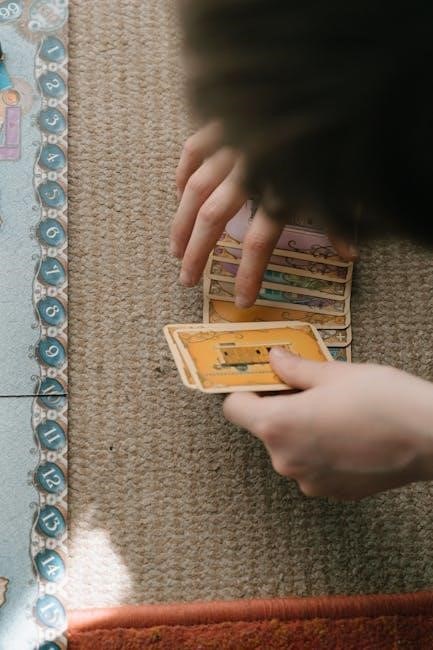
The bidding process in Bridge is a crucial phase where partnerships communicate the strength of their hands. Players take turns making bids, stating how many tricks they believe their side can win, and in what suit. Bids start low and increase incrementally.
Each bid represents a contract – an agreement to win at least the specified number of tricks with the nominated suit as trump, or with no trump. Players must follow bidding conventions, established guidelines for conveying information about hand strength and suit preferences.
Bidding continues until three consecutive players pass, indicating they don’t wish to bid higher. The final bid establishes the contract that the declaring side must fulfill during the play of the hand.
Playing the Hand in Bridge
After the bidding concludes, the play of the hand begins. The player to the left of the declarer leads the first card, initiating a series of tricks. Each player, in clockwise order, must follow suit if possible; otherwise, they can play any card.
The highest card of the suit led wins the trick, unless a trump card is played, in which case the highest trump wins. The winner of each trick leads the next card. This continues until all thirteen tricks have been played.
The declarer aims to fulfill the contract established during bidding, winning at least the number of tricks specified. Scoring is based on whether the contract is made or broken, with bonuses for overtricks and penalties for undertricks.
Canasta: Building Melds and Scoring
Canasta revolves around forming “melds” – sets of at least three cards of the same rank. Wild cards (Jokers and Twos) are crucial for completing melds, adding strategic depth. A “canasta” is a meld of at least seven cards, and there are different types: natural (all matching rank) and mixed (including wilds).
Players aim to make melds and “go out” by discarding their last card, ideally after forming at least one canasta. Scoring involves points for melds, canastas, and cards held by opponents. Red Threes offer bonus points, while Black Threes block opponents from picking up the discard pile.
Strategic discarding and careful observation of opponents’ melds are key to success in Canasta, making it a challenging and rewarding card game.
Canasta Meld Combinations
Canasta melds require a minimum of three cards of identical rank. Wild cards – Jokers and Deuces – are vital for completing and extending melds, offering strategic flexibility. A fundamental combination is a natural meld, consisting entirely of cards of the same rank without wilds.
Mixed melds incorporate wild cards alongside matching rank cards. The more wilds used, the lower the point value of the meld. A crucial goal is forming a “canasta” – a meld of at least seven cards. Natural canastas score higher than mixed canastas.
Understanding these combinations is essential for maximizing points and strategically hindering opponents’ progress in this engaging card game.
Scoring in Canasta
Canasta scoring is complex, rewarding strategic melds and skillful play. Points are tallied based on the value of cards melded, with red threes earning substantial bonuses. Wild cards contribute lower point values, emphasizing the importance of natural melds.
Completing a canasta – a meld of seven or more cards – yields significant points, with natural canastas scoring higher than mixed ones. Going “out” by melding all cards in hand and discarding earns a bonus. Opponents deduct points for cards remaining in their hands.
The first team to reach a predetermined score, typically 5000, wins the game. Accurate scoring and understanding bonus structures are crucial for success in Canasta.
Baccarat: A Game of Chance
Baccarat is renowned as a simple yet elegant game of chance, captivating players with its straightforward rules and thrilling anticipation. The objective is to bet on the hand – Player or Banker – closest to a total of nine.
Cards are dealt according to a fixed set of rules, with face cards valued at zero and number cards at their face value. Aces count as one. If a hand totals over nine, ten is subtracted, resulting in a single-digit score.
Baccarat offers a relatively low house edge, making it popular among casino enthusiasts. Understanding the betting options and the basic gameplay is key to enjoying this classic card game.
Understanding the Baccarat Table
The Baccarat table appears daunting initially, but its layout is quite logical. Typically, it accommodates up to nine players, each with a designated betting area. The central area is reserved for the dealer, who manages the cards and payouts.
Three betting spots are prominent: ‘Player’, ‘Banker’, and ‘Tie’. Players wager on which hand they believe will win. The ‘Banker’ bet has a slightly lower house edge, but a commission is usually charged on winning Banker bets.
Numbered positions around the table correspond to player seats. The table also displays previous results, aiding some players in spotting patterns, though each hand is independent.
Baccarat Betting Options
Baccarat presents three primary betting choices: Player, Banker, and Tie. Betting on the ‘Player’ offers even money payout – a winning bet returns your stake plus an equal amount. The ‘Banker’ bet also pays even money, but typically incurs a 5% commission on wins, reducing the net payout slightly.
The ‘Tie’ bet is the riskiest, offering a significantly higher payout (usually 8:1 or 9:1) due to its lower probability. Players predict whether the Banker’s or Player’s hand will be closer to a total of nine.
Before cards are dealt, all bets must be placed. Understanding these options is crucial, as Baccarat is largely a game of chance, and strategic betting can influence outcomes.

Variations and House Rules
Adapting rules for diverse players is common, with house rules adding unique twists to familiar games, enhancing enjoyment and personalization.

Adapting Rules for Different Players
Card game enjoyment thrives on inclusivity, necessitating rule adaptations for varying player skill levels and preferences. Simplifying complex games for beginners, perhaps by removing certain betting rounds or strategic elements, can foster quicker learning and engagement.
Conversely, experienced players might appreciate increased complexity through added challenges or modified scoring systems. Consider adjusting hand rankings, introducing new card combinations, or altering the pace of play to cater to their expertise.

Furthermore, accommodating players with physical limitations is crucial. Larger print cards, assistive devices for shuffling, or modified dealing procedures can ensure everyone participates fully. Flexibility and open communication are key to creating a welcoming and enjoyable gaming experience for all, ensuring the rules serve the players, not the other way around.
Common House Rule Examples
House rules inject personality into card games, fostering unique experiences within a group. A frequent adaptation involves modifying the penalty for incorrect slaps in games like Slapjack – instead of giving a card, players might perform a small forfeit.
In Poker, some groups allow “missed blinds” to be carried over, adding strategic weight to later hands. Canasta players often adjust scoring bonuses for specific melds, altering the game’s risk-reward balance.
Another common tweak is altering the dealing procedure, perhaps introducing a rotating dealer or a specific card distribution method. Remember, clearly communicating these house rules before play begins is paramount to avoid disputes and ensure fair, enjoyable gameplay for everyone involved. These small changes can significantly impact the game’s dynamic.
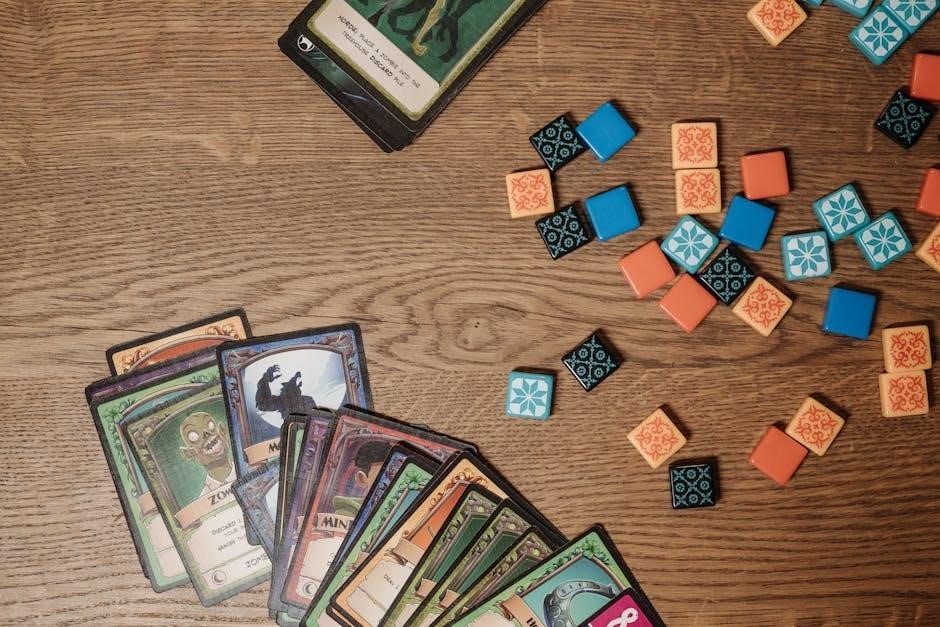
Card Game Etiquette
Respectful gameplay and handling disputes calmly are vital for enjoyable card games; avoid cheeky behavior and prioritize fairness among all players.
Respectful Gameplay
Maintaining a positive atmosphere is crucial during card games; avoid disruptive behavior that could spoil the fun for others. Players should refrain from excessive celebration after winning hands, as it can be perceived as boastful or unsportsmanlike.
Similarly, avoid dwelling on losses or blaming opponents for unfavorable outcomes. A gracious attitude, whether winning or losing, demonstrates good sportsmanship and fosters a more enjoyable experience for everyone involved.
Respecting the pace of play is also important; avoid deliberately slowing down the game or rushing others. Allow each player sufficient time to consider their options and make their moves without undue pressure.
Furthermore, refrain from offering unsolicited advice or criticizing other players’ strategies; Unless specifically asked for assistance, it’s best to let players make their own decisions and learn from their experiences.
Handling Disputes
Disagreements can arise during card games, but resolving them calmly and fairly is essential for maintaining a pleasant atmosphere. When a dispute occurs, the first step is to clearly state the issue at hand, ensuring all involved understand the point of contention.
Players should then present their perspectives respectfully, avoiding accusatory language or personal attacks. Referencing the established rules of the game is crucial; a neutral party can consult the instructions if needed to clarify any ambiguities.
If a consensus cannot be reached, consider a simple method like a majority vote or flipping a coin to determine the outcome. Avoid prolonged arguments that disrupt the flow of the game.
Remember, the goal is to find a resolution that is acceptable to all players, preserving the spirit of friendly competition and ensuring everyone can continue enjoying the game.