
Bionic enhancements‚ fueled by recent advances‚ are rapidly evolving‚ promising a future where human capabilities transcend natural limits.
These technologies‚ including advanced prosthetics and exoskeletons‚ are reshaping perceptions of physical potential and redefining what it means to be human.
Defining Bionic Superhumans
The term “bionic superhuman” evokes images of individuals possessing abilities exceeding typical human limits‚ achieved through the integration of technology with biological systems. However‚ a precise definition remains elusive‚ evolving alongside technological advancements. Currently‚ it encompasses individuals utilizing advanced bionic implants – prosthetics‚ exoskeletons‚ and sensory augmentations – to restore lost functions or enhance existing ones beyond natural capabilities.
This isn’t simply about replacing lost limbs; it’s about surpassing natural performance. For example‚ bionic hands offering superior dexterity and strength‚ or exoskeletons granting incredible physical endurance. The key distinction lies in the degree of enhancement; a prosthetic restoring basic function isn’t necessarily creating a “superhuman‚” but one offering significantly improved capabilities might be. As technology progresses‚ the line between restoration and enhancement will blur‚ continually redefining this fascinating concept.
Historical Context of Bionic Implants
The quest to replace lost limbs and augment human capabilities dates back centuries‚ with early attempts focusing on basic prosthetic devices. However‚ the modern era of bionics truly began in the 20th century‚ spurred by wartime injuries and advancements in materials science and electronics. Early prosthetics offered limited functionality‚ primarily cosmetic replacements.
The latter half of the century witnessed the development of myoelectric prosthetics‚ controlled by muscle signals‚ representing a significant leap forward. More recently‚ the 21st century has seen exponential growth‚ driven by microprocessors‚ advanced sensors‚ and breakthroughs in neurological interfaces. These innovations are paving the way for increasingly sophisticated bionic systems‚ moving beyond simple replacement towards true functional enhancement and‚ ultimately‚ the potential for creating “bionic superhumans.”

Current State of Bionic Technology (as of 02/06/2026)
As of today‚ bionic limbs demonstrate enhanced dexterity and sensory feedback‚ while exoskeletons offer context-awareness via computer vision for improved real-life functionality.
Bionic Limbs: Beyond Basic Prosthetics
Modern bionic limbs represent a significant leap beyond traditional prosthetics‚ focusing on restoring not just function‚ but also a sense of natural movement and interaction with the environment. Research‚ as detailed in the MDPI systematic review (2024)‚ highlights advancements in mechanical design‚ striving for optimal dexterity‚ reduced weight‚ and increased durability. Crucially‚ the integration of sophisticated sensory feedback technologies – tactile‚ visual‚ and auditory – is dramatically improving user experience.
These systems provide essential environmental cues‚ allowing for more intuitive and precise control. The focus isn’t solely on replicating the appearance of a natural limb‚ but on achieving functional equivalence and enhancing the user’s ability to perform complex tasks. This ongoing development signifies a move towards truly integrated bionic solutions.

Advances in Bionic Hand Technology (MDPI‚ 2024)
The MDPI systematic review (2024) meticulously examines the latest progress in bionic hand technology‚ emphasizing a holistic approach to design and functionality. A key area of focus is the enhancement of sensory feedback‚ incorporating tactile sensors to relay texture and pressure‚ alongside visual and auditory modalities for a richer interactive experience. The research highlights the importance of balancing dexterity with practical considerations like weight and durability‚ crucial for everyday use.
Furthermore‚ the review identifies the need for improved control system integration and a greater emphasis on aesthetic realism‚ aiming for prostheses that closely resemble natural limbs in both form and function. This compilation of current trends points towards a future of increasingly sophisticated and user-friendly bionic hands.
Bionic Sensory Systems
Restoring and augmenting sensory input is paramount in the development of truly integrated bionic systems. Current research focuses intensely on recreating the sense of touch through tactile feedback in prosthetics‚ allowing users to perceive texture‚ pressure‚ and temperature. This isn’t limited to touch; advancements are being made in seamlessly integrating visual and auditory information with bionic limbs.
The goal is to provide a comprehensive sensory experience‚ enhancing user interaction with the environment and improving control. These systems move beyond simple functionality‚ aiming to deliver intuitive and natural sensations‚ crucial for achieving a sense of embodiment and maximizing the potential of bionic augmentation.
Tactile Feedback in Prosthetics
Replicating the sense of touch remains a significant challenge‚ yet crucial for intuitive prosthetic control. Recent advancements‚ as highlighted in MDPI’s research (2024)‚ explore various sensory feedback technologies. These include methods to transmit pressure‚ vibration‚ and even temperature sensations to the user’s nervous system.
This feedback isn’t merely about feeling; it’s about providing essential environmental information. It allows for delicate manipulation of objects‚ improved grip strength‚ and a more natural interaction with the world. The mechanical design of prosthetic hands is evolving to accommodate these sophisticated sensory systems‚ balancing dexterity with durability and weight‚ ultimately enhancing user experience.
Visual and Auditory Integration
Beyond tactile feedback‚ integrating visual and auditory cues is paramount for creating truly immersive bionic experiences. MDPI’s 2024 systematic review emphasizes the importance of multimodal sensory input. This means combining what a prosthetic limb “feels” with what the user “sees” and “hears” to create a cohesive perception of the environment.
For example‚ visual confirmation of a successful grasp‚ coupled with auditory cues related to object texture‚ can significantly improve prosthetic control and reduce cognitive load. This integration enhances user interaction‚ fostering a more natural and intuitive connection between the bionic device and the user’s brain‚ paving the way for more sophisticated applications.
Exoskeletons and Human Augmentation
Exoskeletons represent a significant leap in human augmentation‚ extending beyond restorative applications to enhance physical capabilities. PMC research highlights the development of “context-aware” exoskeletons utilizing computer vision. This allows the device to anticipate user intent by understanding the surrounding environment and predicting potential movements.
Such predictive capabilities share the control effort‚ making operation more seamless and intuitive. This isn’t simply about adding strength; it’s about intelligent assistance. These advancements enable real-life functionality‚ moving exoskeletons beyond laboratory settings and into practical applications like industrial work‚ disaster relief‚ and even everyday mobility assistance‚ blurring the lines between human and machine.
Context-Aware Exoskeletons & Computer Vision (PMC)
A key innovation in exoskeleton technology‚ as detailed by PMC‚ centers around imbuing these devices with “context awareness” through the integration of computer vision. This approach moves beyond simple motor assistance‚ enabling the exoskeleton to interpret the user’s environment and anticipate their intended movements. By understanding the surrounding context – obstacles‚ terrain‚ tasks – the exoskeleton can proactively adjust its support.
This predictive capability‚ achieved through sophisticated algorithms analyzing visual data‚ significantly reduces the cognitive load on the user and enhances the naturalness of the interaction. The system anticipates potential motor tasks‚ effectively sharing the control effort and allowing for more fluid‚ real-world functionality‚ paving the way for truly integrated human-machine systems.
Applications in Rehabilitation and Strength Enhancement
Exoskeletons are demonstrating remarkable potential in both rehabilitative medicine and physical performance augmentation. In rehabilitation‚ these devices provide targeted assistance to patients recovering from stroke‚ spinal cord injuries‚ or other conditions causing motor impairment‚ facilitating regaining lost function. They offer customizable support‚ allowing therapists to precisely control the level of assistance provided during exercises.
Beyond rehabilitation‚ exoskeletons are being developed to enhance human strength and endurance for physically demanding tasks. Industries like construction‚ logistics‚ and the military are exploring their use to reduce worker fatigue‚ prevent injuries‚ and increase productivity. This dual application – restoration and enhancement – highlights the broad impact of this technology‚ bringing the concept of “bionic superhumans” closer to reality.

Bionic Enhancements Beyond Limbs
Expanding beyond prosthetics‚ bionic technology now targets internal organs and sensory systems‚ offering solutions for vision‚ hearing‚ and vital organ support.
Bionic Organs: Artificial Hearts‚ Kidneys‚ and More
The development of fully functional bionic organs represents a monumental leap in medical engineering‚ moving beyond simply supporting failing organs to potentially replacing them entirely. Artificial hearts‚ once limited by power sources and biocompatibility issues‚ are now incorporating advanced materials and miniaturized pumps for improved longevity and patient outcomes. Research extends to artificial kidneys‚ aiming to replicate the complex filtration processes of natural organs‚ offering a lifeline to those suffering from renal failure.
Furthermore‚ investigations into bionic pancreases and livers are underway‚ promising automated glucose regulation and detoxification capabilities. These advancements aren’t merely about extending lifespan; they’re about restoring quality of life‚ allowing individuals to live free from the constraints of chronic organ disease and potentially enhancing physiological performance beyond natural limits. The integration of these bionic organs with the body’s nervous system remains a significant challenge‚ but ongoing progress in neurological interfaces offers a pathway towards seamless control and feedback.
Bionic Eyes and Vision Restoration
Bionic eyes are rapidly progressing from experimental prototypes to viable solutions for restoring sight to individuals with various forms of blindness. These devices‚ often utilizing retinal implants‚ bypass damaged photoreceptor cells‚ directly stimulating the optic nerve to transmit visual information to the brain. Current research focuses on increasing the resolution and color perception capabilities of these implants‚ moving beyond basic light and shadow detection;
Beyond retinal implants‚ advancements in visual and auditory integration are crucial for creating a comprehensive sensory experience. Scientists are exploring ways to combine visual input from bionic eyes with auditory cues‚ enhancing spatial awareness and object recognition. The ultimate goal is not just to restore functional vision‚ but to potentially augment it‚ offering capabilities beyond natural human sight‚ such as infrared or ultraviolet perception‚ truly pushing the boundaries of human sensory experience.
Bionic Ears and Hearing Augmentation
Bionic ear technology is experiencing a renaissance‚ moving beyond traditional hearing aids to offer solutions for profound hearing loss and even explore the realm of auditory augmentation. Cochlear implants‚ already a well-established technology‚ continue to improve in sound fidelity and speech recognition capabilities. Emerging research focuses on stimulating specific auditory nerve fibers to create a more nuanced and natural hearing experience.
Furthermore‚ the integration of visual and auditory systems is proving vital for enhanced sensory perception. Combining restored hearing with bionic vision creates a richer‚ more complete understanding of the surrounding environment. Future developments may include directional hearing enhancement‚ noise cancellation far exceeding current capabilities‚ and even the ability to perceive frequencies outside the normal human range‚ effectively creating “superhuman” hearing.
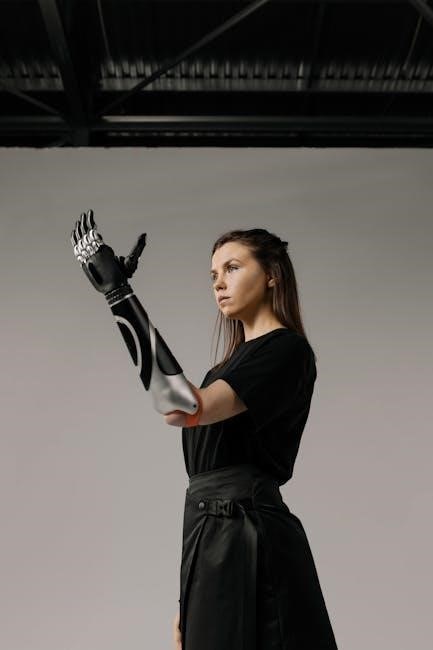
The Science Behind Bionic Systems
Bionic systems rely on interdisciplinary fields – materials science‚ neurological interfaces‚ and heat transfer – to function effectively‚ pushing boundaries of human-machine integration.
Bionic Fractal Microchannel Heat Transfer (Springer Nature‚ 2023)
Efficient thermal management is crucial for the performance and longevity of advanced bionic systems‚ particularly those generating significant heat during operation. Research published in the Journal of Thermal Analysis and Calorimetry (Springer Nature‚ 2023) focuses on enhancing heat transfer within microchannels using bionic fractal structures.
This innovative approach draws inspiration from natural designs like leaf veins‚ tree branches‚ and lung tracheae‚ replicating their efficient branching patterns to maximize surface area and improve fluid flow. The study systematically classifies and summarizes current research on this topic‚ demonstrating the potential of bionic fractal structures to significantly enhance heat dissipation in microchannel systems.
Such advancements are vital for miniaturizing bionic components and ensuring their reliable operation‚ paving the way for more sophisticated and powerful bionic enhancements.
Materials Science in Bionics
The development of advanced bionic systems hinges on breakthroughs in materials science‚ demanding materials that are lightweight‚ durable‚ biocompatible‚ and capable of interacting seamlessly with biological tissues. Current research focuses on novel alloys‚ polymers‚ and composites designed to mimic the properties of natural materials while offering superior performance.
Biocompatibility is paramount‚ requiring materials that minimize immune response and promote tissue integration. Simultaneously‚ materials must withstand the stresses of repeated movement and environmental exposure.
Furthermore‚ the quest for miniaturization necessitates materials with exceptional strength-to-weight ratios. Ongoing innovations in nanotechnology and biomimicry are driving the creation of these next-generation materials‚ essential for realizing the full potential of bionic enhancements.
Neurological Interfaces and Brain-Machine Connections
A critical component of advanced bionics lies in establishing robust and reliable neurological interfaces‚ enabling direct communication between the nervous system and prosthetic devices. These brain-machine connections (BMIs) aim to restore lost function and even augment existing capabilities.
Current research explores various approaches‚ including implanted electrodes‚ non-invasive techniques like electroencephalography (EEG)‚ and optogenetics. The challenge lies in decoding neural signals accurately and translating them into control commands for bionic limbs or organs.
Significant progress is being made in developing algorithms that can interpret complex brain activity‚ paving the way for intuitive and seamless control of bionic systems. Overcoming challenges related to signal stability and long-term biocompatibility remains crucial for widespread adoption.

Psychological and Social Impact
Bionic integration profoundly impacts self-perception‚ body image‚ and social acceptance‚ with users reporting increased competence and self-efficacy‚ despite potential stereotyping.
Impact on Self-Perception and Body Image (ScienceDirect)
The integration of bionic technology significantly alters an individual’s self-perception and body image‚ often leading to a more positive outlook compared to reliance on traditional‚ less-advanced prosthetic solutions. Research‚ as highlighted by ScienceDirect‚ indicates that users of bionic prostheses frequently experience a heightened sense of embodiment – a feeling of ownership and control over the artificial limb as if it were a natural part of their body.
This positive feedback loop contributes to increased self-esteem and a diminished sense of disability. The ability to perform tasks previously impossible fosters a renewed sense of agency and independence. However‚ the journey isn’t without its complexities; initial adjustment periods can involve psychological challenges as individuals reconcile their physical self with the technological augmentation. Successfully navigating this process is crucial for maximizing the psychological benefits and achieving a harmonious integration of the bionic device into one’s self-concept.
Increased Competence and Self-Efficacy
Bionic enhancements demonstrably boost a user’s perceived competence and self-efficacy‚ empowering them to overcome limitations previously imposed by physical disability. ScienceDirect research confirms that individuals equipped with advanced bionic limbs report a significant increase in their ability to perform daily tasks‚ participate in recreational activities‚ and pursue professional goals. This newfound capability translates directly into a stronger belief in their own abilities – a core component of self-efficacy.
The ability to regain lost function‚ or even surpass previous levels of performance‚ fosters a sense of mastery and control over one’s environment. This‚ in turn‚ encourages individuals to embrace new challenges and push the boundaries of what they believe is possible. The positive cycle of success and increased confidence contributes to a more fulfilling and independent lifestyle‚ fundamentally altering their perception of their own potential.
Addressing Stereotyping and Social Acceptance
Despite the empowering potential of bionic technology‚ societal perceptions and ingrained stereotypes present significant hurdles to full integration. Historically‚ individuals with visible disabilities have faced prejudice and discrimination‚ often being viewed as less capable or dependent. As bionic enhancements become more prevalent‚ proactively addressing these biases is crucial for fostering inclusivity and ensuring equal opportunities.
Education and awareness campaigns are vital in dismantling misconceptions and promoting a more nuanced understanding of bionic users. Highlighting their achievements‚ showcasing their contributions to society‚ and emphasizing their individuality can challenge negative stereotypes. Furthermore‚ fostering open dialogue and creating supportive communities can help bionic individuals navigate social interactions with confidence and dignity‚ ultimately paving the way for broader social acceptance.

Challenges and Future Directions
Significant hurdles remain in power efficiency‚ miniaturization‚ and biocompatibility‚ demanding innovative solutions for truly seamless bionic integration and widespread adoption.
Power Sources and Energy Efficiency
A critical bottleneck in the advancement of bionic systems lies in developing sustainable and efficient power sources. Current bionic limbs and organs often rely on batteries‚ which necessitate frequent recharging and can be bulky or have limited lifespans. Future progress demands exploring alternative energy harvesting methods‚ such as biomechanical energy scavenging – converting movement into electricity – or utilizing advanced‚ lightweight fuel cells.
Improving energy efficiency is equally paramount. Reducing the power consumption of actuators‚ sensors‚ and processing units will extend operational time and minimize heat generation. Research into novel materials and optimized control algorithms is crucial. Furthermore‚ wireless power transfer technologies could eliminate the need for physical connections‚ enhancing user convenience and reducing infection risks. Ultimately‚ a breakthrough in power technology is essential for realizing the full potential of bionic superhumans.
Miniaturization and Biocompatibility
Significant hurdles remain in shrinking the size of bionic components while ensuring long-term biocompatibility. Larger devices can be cumbersome and limit natural movement‚ while non-biocompatible materials can trigger immune responses‚ leading to rejection or inflammation. Advances in nanotechnology and materials science are vital for creating micro- and nano-scale sensors‚ actuators‚ and power sources.
Developing materials that seamlessly integrate with biological tissues is paramount. This includes exploring bio-inspired polymers‚ coatings that promote tissue ingrowth‚ and designs that minimize foreign body reactions. Furthermore‚ miniaturization must not compromise functionality or durability. Innovative manufacturing techniques‚ like 3D bioprinting‚ offer promising avenues for creating customized‚ biocompatible bionic components‚ paving the way for more natural and effective human augmentation.
Ethical Considerations of Bionic Augmentation
The prospect of bionic superhumans raises profound ethical dilemmas. Equitable access to these technologies is a primary concern; if only the wealthy can afford enhancements‚ it could exacerbate existing societal inequalities‚ creating a divide between the ‘enhanced’ and ‘unenhanced’. Questions of fairness in competitive settings – sports‚ employment‚ and education – also arise.
Furthermore‚ the potential for misuse and the impact on human identity require careful consideration. Concerns about bodily autonomy‚ the definition of ‘natural’ ability‚ and the psychological effects of augmentation must be addressed. Robust regulatory frameworks and open public discourse are crucial to navigate these complex ethical landscapes and ensure responsible development and deployment of bionic technologies‚ preventing unintended consequences.

The Horizon: Are Bionic Superhumans Truly on the Horizon?
Advanced bionic systems are rapidly approaching‚ promising significant human performance enhancement‚ potentially redefining evolutionary boundaries and blurring the lines of natural ability.
Predictive Timelines for Advanced Bionic Systems
Forecasting the arrival of truly “superhuman” bionic capabilities requires careful consideration of ongoing research and development. Within the next decade (by 2036)‚ we can anticipate significant strides in neural interfaces‚ allowing for more intuitive and precise control of prosthetic limbs and exoskeletons. Context-aware exoskeletons‚ leveraging computer vision to anticipate user intent‚ will likely become commonplace‚ enhancing rehabilitation and providing substantial strength augmentation.
Further out‚ by 2040-2050‚ fully integrated bionic organs – artificial hearts and kidneys with enhanced functionality – may become a reality‚ extending lifespans and improving quality of life. Bionic eyes offering near-natural vision restoration are also within reach. However‚ achieving seamless integration with the nervous system and overcoming biocompatibility challenges remain key hurdles. The timeline hinges on continued breakthroughs in materials science‚ power efficiency‚ and ethical frameworks governing human augmentation.
Potential for Human Performance Enhancement
Bionic technology isn’t solely about restoring lost function; it holds immense potential for enhancing existing human capabilities. Advanced bionic limbs‚ coupled with sophisticated control systems‚ could grant individuals superhuman strength‚ speed‚ and dexterity‚ exceeding natural biological limits. Exoskeletons‚ particularly those with context-awareness‚ promise to dramatically increase physical endurance and reduce the risk of injury in demanding professions.
Furthermore‚ bionic sensory systems – enhanced vision‚ hearing‚ and tactile feedback – could provide heightened awareness of the environment. Imagine athletes with bionic enhancements achieving peak performance or first responders with augmented senses navigating hazardous situations. However‚ equitable access and the potential for creating disparities in physical ability raise crucial ethical considerations that must be addressed proactively.

The Future of Human Evolution with Bionics
Bionics may represent a pivotal moment in human evolution‚ potentially shifting us from biological adaptation to directed technological augmentation. As bionic systems become increasingly integrated with the human body – through advanced neurological interfaces and biocompatible materials – the line between natural and artificial will blur. This could lead to a future where enhancements are not merely assistive but integral to our very being.
The long-term consequences are profound. Will future generations be born with‚ or routinely receive‚ bionic enhancements? Will this create a divergence in the human species? Addressing the ethical implications of such a future – including issues of accessibility‚ identity‚ and the very definition of “human” – is paramount as we navigate this transformative era.