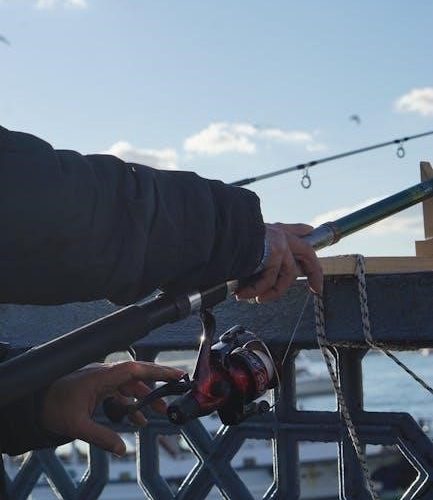
Understanding fishing rod guide sizes is crucial for optimal casting distance, line control, and preventing line damage – especially when targeting species like King George Whiting.
Guides facilitate smooth line flow, distributing stress and enhancing overall fishing performance, whether surf fishing or freshwater pursuits like carp angling.
What is a Fishing Rod Guide?
Fishing rod guides are the small loops positioned along the length of a fishing rod, serving a vital function in managing the fishing line. They aren’t merely attachments; they are engineered components designed to direct the line from the reel to the rod’s tip with minimal friction.
These guides, often made from materials like ceramic, aluminum oxide, or silicon carbide, prevent direct contact between the line and the rod itself, safeguarding the rod’s finish and, more importantly, the line’s integrity. Without guides, the line would chafe and potentially break during casting or reeling, especially with powerful species like carp or during long surf casts for whiting.
Properly sized and spaced guides are essential for maximizing casting distance and accuracy, contributing significantly to a successful fishing experience.
Why Guide Size Matters
Guide size directly impacts casting performance and line management. Undersized guides create friction, reducing casting distance and potentially damaging the line, particularly with heavier lines used for surf fishing or targeting larger carp. Conversely, oversized guides offer minimal benefit and can be unnecessarily bulky.
Correct guide sizing ensures smooth line flow, minimizing stress points that can lead to line failure. This is especially critical when pursuing species known for powerful runs, like King George Whiting in strong currents.
Choosing the right guide size, based on line weight and rod power, optimizes the rod’s efficiency and protects your investment in quality fishing line.
Understanding Fishing Line and Rod Power
Line weight and rod power are intertwined; a heavier line requires a more powerful rod, while lighter lines suit lighter power rods for optimal performance.
Line Weight and Diameter
Fishing line is rated by its breaking strength, known as line weight, typically measured in pounds (lbs). This indicates the force needed to snap the line. However, diameter, measured in millimeters (mm) or inches, also plays a vital role, especially concerning guide size.
Thicker lines, with higher pound tests, require larger diameter guides to prevent friction and potential line damage during casting. Conversely, thinner lines necessitate smaller guides. Selecting the correct guide size based on line diameter ensures smooth line flow, maximizing casting distance and minimizing stress on the line and rod.
Consider that line weight isn’t always directly proportional to diameter, as material composition (monofilament, fluorocarbon, braid) influences this relationship. Therefore, always prioritize matching guide size to the actual line diameter used for optimal performance, particularly when targeting species like Whiting.
Rod Power: Light, Medium, Heavy
Rod power defines the amount of pressure needed to bend the rod, influencing the types of lures and lines it can effectively handle. It’s categorized as Light, Medium, or Heavy, impacting guide size selection.
Light power rods, suited for smaller species like some Whiting, require smaller guides to match lighter lines. Medium power rods, versatile for a wider range of fish, necessitate medium-sized guides. Heavy power rods, designed for larger, stronger fish, demand larger guides to accommodate heavier lines and withstand increased stress.
Matching rod power to the target species and line weight is crucial. A mismatch can lead to inefficient casting, reduced sensitivity, and potential rod or line failure. Correct guide sizing, aligned with rod power, ensures optimal performance and protects your equipment.
Rod Action: Fast, Moderate, Slow
Rod action describes where the rod bends along its length, impacting casting accuracy, sensitivity, and hook-setting power. It’s classified as Fast, Moderate, or Slow, directly influencing appropriate guide size choices.
Fast action rods bend primarily at the tip, offering high sensitivity and quick hooksets, often requiring smaller diameter guides for optimal performance. Moderate action rods bend more towards the middle, providing a balance of sensitivity and power, needing medium-sized guides. Slow action rods bend along most of their length, ideal for absorbing shock, and typically utilize larger guides.
Selecting guides that complement rod action ensures efficient energy transfer during casting and fighting fish, enhancing overall fishing experience and preventing line damage.
Fishing Rod Guide Size Chart Basics
Charts correlate line weight, rod power, and target species to appropriate guide sizes, expressed in millimeters or inches, ensuring optimal casting and preventing damage.
How to Read a Guide Size Chart
Guide size charts typically present a matrix relating fishing line specifications – weight and diameter – to recommended guide sizes. These charts often categorize rods by power (light, medium, heavy) and action (fast, moderate, slow), further refining guide selection.
Locate your line’s weight rating (e.g., 8-17lb test) and diameter (e.g., 0.010 inches). Find the intersection of these values on the chart. The corresponding number indicates the ideal guide size, usually in millimeters (mm) or fractions of an inch.
Consider the target species; larger fish necessitate larger guides to handle heavier line and increased stress. Charts may also offer guidance based on fishing technique – spinning versus baitcasting – as these methods impose different demands on the guiding system.
Common Guide Size Measurements (mm/inches)
Fishing rod guides are measured in millimeters (mm) or inches, representing the inner diameter of the guide ring. Common sizes range from very small – around 6mm or 1/8 inch – for ultra-light spinning rods targeting smaller species, to larger sizes exceeding 16mm or 5/8 inch for heavy surf or saltwater applications.
Typical freshwater setups often utilize guides between 8mm (3/8 inch) and 12mm (1/2 inch). Saltwater rods, especially those used for baitcasting or targeting larger fish, frequently employ guides from 10mm (3/8 inch) up to 20mm (3/4 inch) or even larger.
Precise sizing is crucial; a guide that’s too small restricts line flow, while one that’s too large offers insufficient support.
Guide Size Charts by Fishing Type
Specific fishing styles – surf, carp, or King George Whiting – demand tailored guide sizes for optimal performance, line management, and casting efficiency.
Surf Fishing Guide Size Chart
Surf fishing necessitates robust guides capable of handling heavier lines and resisting saltwater corrosion. Larger diameter lines, typically 20-30lb test, are common when casting long distances into surf gutters for species like Whiting.
Consequently, surf rods generally employ guides ranging from size 20 to 25 (using the Fuji guide system as a reference), or approximately 8mm to 10mm in diameter for the first guide. Subsequent guides progressively decrease in size down the rod’s length.
The first guide’s size is paramount, managing shock loads during casting. Materials like aluminum oxide or silicon carbide (SiC) are preferred for their durability and heat dissipation, crucial when battling powerful fish in challenging conditions. Proper spacing is also vital for smooth line flow.
King George Whiting Fishing Guide Sizes
Targeting King George Whiting, often in calmer waters like Port Phillip Bay, allows for slightly smaller guide sizes compared to surf fishing. Lighter line weights, typically 4-8lb, are frequently used to maximize sensitivity and entice bites from these cautious fish.
Therefore, guide sizes in the range of 12 to 16 (Fuji scale) or approximately 5mm to 7mm for the initial guide are generally suitable. These smaller guides minimize line friction and maintain a delicate presentation.
High-quality ceramic or SiC guides are recommended to reduce line wear, especially with the use of finer monofilament or fluorocarbon lines. Precise guide spacing is also important for optimal casting accuracy and preventing line tangles during retrieves near reef structures.
Carp Fishing Guide Size Chart
Carp fishing often involves heavier lines and longer casts, demanding robust guide sizes. Typically, carp anglers utilize line strengths ranging from 15lb to 30lb test, depending on the size of the carp and the presence of snags.
Consequently, guide sizes between 16 and 25 (Fuji scale), or roughly 8mm to 10mm for the first guide, are commonly employed. These larger guides accommodate the thicker line diameters and reduce friction during powerful casts.
Durable materials like aluminum oxide or silicon carbide (SiC) are preferred to withstand abrasion from the line and potential impacts. Proper guide spacing is crucial for distributing pressure and preventing line damage during the fight with a strong carp.
General Freshwater Fishing Guide Sizes
For typical freshwater species like bass, trout, and panfish, a versatile range of guide sizes proves effective. Line weights generally fall between 6lb and 12lb test, influencing the appropriate guide diameter.
Fuji guide sizes 12 to 20 are commonly used, translating to approximately 6mm to 8mm for the initial guide. Smaller guides are suitable for lighter lines and finesse techniques, while larger ones handle heavier lines and lures.
Ceramic or aluminum oxide guides are popular choices, offering a balance of durability and affordability. Correct guide spacing ensures smooth casting and prevents line tangles, enhancing the overall freshwater fishing experience.
Saltwater Spinning Fishing Guide Sizes
Saltwater spinning demands robust guides capable of handling braided lines and corrosive environments. Line weights typically range from 10lb to 30lb, dictating larger guide diameters compared to freshwater setups.
Fuji guide sizes 16 to 25 are frequently employed, corresponding to approximately 8mm to 10mm for the first guide. Silicon carbide (SiC) guides are highly recommended due to their exceptional heat dissipation and durability.
Proper guide spacing is crucial for minimizing friction and maximizing casting distance when targeting inshore species. Consider using a tapered guide train for optimal line flow and reduced line wear in saltwater conditions.
Saltwater Baitcasting Fishing Guide Sizes
Saltwater baitcasting requires guides built to withstand heavier lines and powerful casts. Line weights commonly range from 20lb to 50lb, necessitating larger guide diameters than spinning setups.
Fuji guide sizes 20 to 30 are often utilized, translating to approximately 10mm to 12mm for the initial guide. Aluminum oxide or silicon carbide (SiC) guides are preferred for their strength and resistance to saltwater corrosion.
Precise guide spacing is vital for managing backlash and achieving accurate casts when pursuing offshore species. A well-tapered guide train ensures smooth line travel and minimizes friction during demanding saltwater applications.
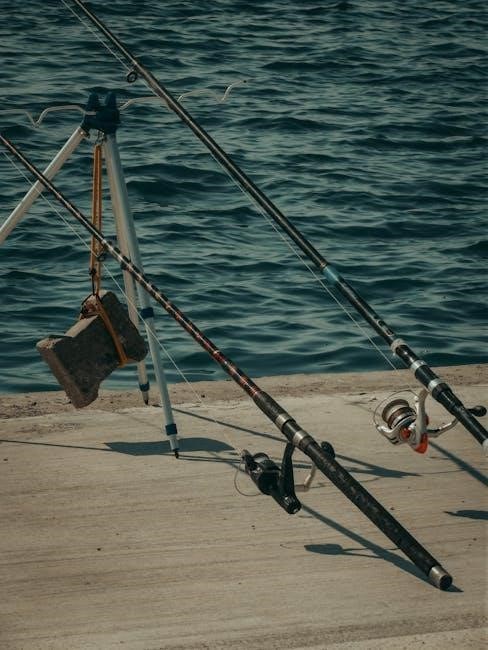
Factors Influencing Guide Size Selection
Rod length, target species, and chosen fishing technique significantly impact guide size; larger rods and heavier targets demand larger, more robust guide setups.
Rod Length
Rod length is a primary factor in determining appropriate guide size and spacing. Longer rods generally require more guides, and often, guides with slightly larger diameters, to effectively manage the increased line travel and distribute stress. This is particularly important when casting heavier lines or lures, as seen in surf fishing scenarios.
Shorter rods, conversely, can often utilize fewer, smaller guides. The increased bend in longer rods necessitates guides that can accommodate the wider arc of the line during casting. Incorrect guide sizing relative to rod length can lead to line friction, reduced casting distance, and potential line damage. Therefore, careful consideration of rod length is paramount during guide selection, ensuring optimal performance and longevity.
Target Species
The species you intend to catch significantly influences guide size selection. Targeting larger, stronger fish like carp demands robust guides capable of handling heavier lines and enduring powerful runs. Conversely, when fishing for smaller, more delicate species like King George Whiting, smaller, more sensitive guides are preferable.
Surf fishing, often involving long casts and heavier tackle for larger species, necessitates larger diameter guides to manage the increased line friction. Understanding the typical size and fighting characteristics of your target species is crucial for choosing guides that provide adequate strength, sensitivity, and line control, ultimately enhancing your fishing success.
Fishing Technique
Your chosen fishing technique directly impacts optimal guide size. Spinning techniques, often employing lighter lines and lures, benefit from smaller, smoother guides that minimize friction and maximize casting distance. Baitcasting, typically used with heavier lines and lures, requires larger, more durable guides to handle the increased stress.
Surf fishing, with its long casts and potential for powerful strikes, demands guides capable of managing heavier lines and resisting saltwater corrosion. Techniques like targeting King George Whiting in shallow waters may prioritize sensitivity, favoring smaller guides for better lure control and bite detection. Aligning guide size with your technique is paramount.
Specific Guide Materials and Their Impact
Guide materials—ceramic, aluminum oxide, SiC, and chrome—influence durability, heat dissipation, and line friction, impacting casting performance and longevity of the fishing setup.
Ceramic Guides
Ceramic guides represent a popular choice due to their smooth surface, which significantly reduces friction on the fishing line during casts and retrieves. This smoothness translates to increased casting distance and helps preserve line integrity, preventing heat build-up that can weaken monofilament or fluorocarbon lines.
Different ceramic compositions exist, with aluminum oxide being a common, cost-effective option. However, higher-end ceramic guides often utilize materials like silicon carbide (SiC), known for exceptional hardness and heat dissipation. These premium ceramic guides are particularly beneficial when targeting powerful fish or using braided lines, as they can withstand greater stress and abrasion.
While durable, ceramic guides can be susceptible to cracking or chipping upon impact, especially lower-quality varieties. Regular inspection is recommended to ensure they remain in good condition and continue to protect your line effectively.
Aluminum Oxide Guides
Aluminum oxide guides are a widely utilized and relatively affordable option in fishing rod construction, offering a balance between durability and cost-effectiveness. They are created through a process of anodization, which hardens the aluminum surface and provides resistance to corrosion, making them suitable for both freshwater and saltwater environments.
However, compared to more advanced materials like silicon carbide (SiC), aluminum oxide generates more friction against the fishing line. This increased friction can lead to reduced casting distance and potential heat build-up, particularly when using high-speed retrieves or thinner diameter lines.
Despite this, aluminum oxide guides remain a reliable choice for many anglers, especially for general-purpose fishing applications where extreme performance isn’t paramount. Regular cleaning and maintenance can help minimize friction and extend their lifespan.
Silicon Carbide (SiC) Guides
Silicon carbide (SiC) guides represent a premium option in fishing rod technology, prized for their exceptional smoothness and minimal friction. Manufactured through a sintering process, SiC creates an incredibly hard and durable surface that significantly reduces line wear, enhancing casting distance and accuracy.
The low-friction properties of SiC also dissipate heat efficiently, crucial when using fluorocarbon or braided lines prone to heat damage during extended runs. This makes them ideal for high-performance applications like saltwater spinning or baitcasting, where long casts and powerful retrieves are common.
While more expensive than aluminum oxide or chrome-plated guides, the investment in SiC guides often translates to improved fishing performance and increased line longevity, particularly for serious anglers.
Chrome Plated Guides
Chrome plated guides were historically a common and affordable choice for fishing rods, offering a degree of corrosion resistance. These guides typically feature a metal frame, often brass or aluminum, coated with a layer of chromium for a shiny, protective finish.
However, chrome plating is susceptible to chipping and corrosion over time, especially in harsh saltwater environments. Once the chrome layer is compromised, the underlying metal can quickly corrode, leading to guide failure and potential line damage.
Due to their lower heat dissipation capabilities and increased friction compared to ceramic or SiC guides, chrome plated guides are generally best suited for light freshwater fishing applications where line speed and heat build-up are minimal.
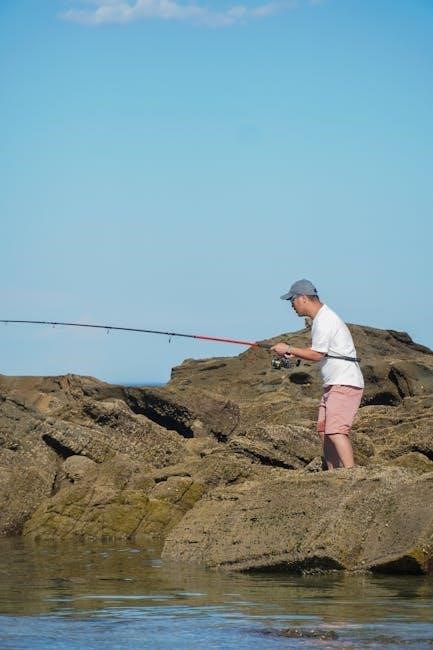
Guide Spacing and Number of Guides
Proper guide spacing and quantity are vital for distributing line stress evenly along the rod, maximizing casting distance, and preventing line tangles.
Optimal Guide Spacing
Achieving optimal guide spacing involves a careful balance, typically starting with a wider gap near the reel and progressively decreasing towards the rod tip. This configuration ensures the line smoothly transitions from the reel to the casting path.
The first guide’s placement is particularly critical, influencing initial line control and preventing excessive bending stress on the rod blank. Subsequent guides should follow a calculated pattern, often utilizing a formula based on rod length and the number of guides.
Manufacturers often provide recommended spacing guidelines, but experienced rod builders may adjust these based on specific line types and intended fishing applications. Consistent spacing minimizes friction and maximizes casting efficiency, ultimately enhancing the angler’s experience and success.
The Role of the First Guide
The first guide, positioned closest to the reel, plays a pivotal role in managing line flow and preventing stress concentrations on the rod blank. Its size and placement are paramount for smooth casting and minimizing line wear.
A correctly sized first guide efficiently directs line from the reel, establishing the initial angle for the casting trajectory. An undersized guide can create friction, reducing casting distance and potentially damaging the line, while an oversized guide may offer insufficient control.
Proper positioning, typically 20-30 inches from the reel seat, ensures the line doesn’t rub against the blank, preserving its integrity. This initial guide sets the foundation for the entire guide train’s performance.
Troubleshooting Guide Size Issues
Incorrect guide sizes cause line damage or reduced casting. Thick lines binding in small guides, or lines wearing thin from oversized guides, require immediate attention.
Line Too Thick for Guides
When fishing line diameter exceeds the guide’s inner diameter, significant friction arises during casting. This friction generates heat, weakening the line and potentially leading to catastrophic failure during a cast or while fighting a fish. You’ll often notice the line visibly struggling to pass through the guide.
Symptoms include a noticeable ‘tick’ or ‘catch’ as the line travels through the guide, increased wear on the line, and reduced casting distance. Prolonged use with an ill-fitting line can create micro-abrasions, ultimately compromising the line’s breaking strength. Inspect your line frequently for signs of damage if you suspect this issue. Consider downsizing your line or upgrading to guides with larger diameters.
Line Damage from Incorrect Guide Size
Using guides that are too small for your line is a common cause of line failure. The constant friction as the line is forced through a restricted space creates heat, weakening the line’s structure. This manifests as fraying, particularly near the guide feet, and can lead to sudden breaks, especially when targeting strong species.
Visible signs include a fuzzy or worn appearance to the line immediately after passing through the guide. Regularly inspect your line, especially after each fishing session, for any signs of abrasion. Preventative measures include matching line weight to appropriate guide sizes and considering smoother guide materials like silicon carbide to minimize friction.
Resources for Finding Guide Size Charts
Numerous online retailers and fishing manufacturers provide detailed guide size charts, while active fishing forums offer community-sourced insights and practical advice.
Online Retailer Charts
Many prominent online retailers specializing in fishing tackle offer comprehensive guide size charts directly on their websites. These charts are often categorized by fishing type – surf, freshwater, or saltwater – and sometimes even by target species, like those focused on King George Whiting.
Retailers frequently present charts in a user-friendly format, detailing recommended guide sizes based on line weight, rod power, and fishing technique. They often include millimeter and inch measurements for easy reference. Furthermore, some retailers provide downloadable PDF versions of their charts for offline access.
Exploring these resources can significantly simplify the guide selection process, especially for anglers new to rod building or repair. Always cross-reference information from multiple sources to ensure accuracy and suitability for your specific needs.
Manufacturer Specifications
Rod manufacturers, like those producing equipment for carp fishing or saltwater spinning, typically provide detailed specifications regarding recommended guide sizes for their specific rod models. This information is often found in the rod’s owner’s manual or on the manufacturer’s official website.
These specifications are crucial because they account for the rod’s unique power, action, and intended application. Following the manufacturer’s guidelines ensures optimal performance and prevents potential issues like line damage or reduced casting distance.
For custom rod builders, accessing these specifications is paramount for replicating the original rod’s performance characteristics; Always prioritize manufacturer recommendations when selecting guides for a specific rod blank, especially when targeting species like King George Whiting.
Fishing Forums and Communities
Online fishing forums, such as Fishing Australia, represent invaluable resources for accessing practical knowledge regarding fishing rod guide sizes. Experienced anglers frequently share their insights and recommendations based on real-world experiences, covering diverse fishing types like surf fishing and carp angling.
These communities often host dedicated threads discussing guide selection for specific rod models or target species, including King George Whiting. Engaging with these forums allows you to learn from others’ successes and avoid common pitfalls.
Furthermore, forums provide a platform to ask questions and receive personalized advice tailored to your specific needs, supplementing manufacturer specifications and retailer charts.
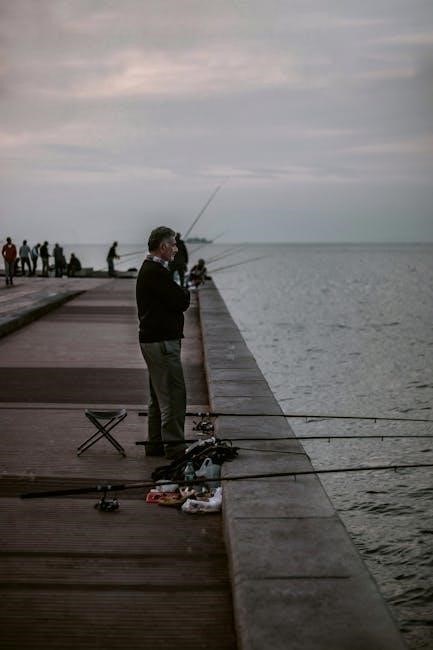
Advanced Guide Considerations
New guide technologies continually emerge, impacting line flow and sensitivity. Custom rod building allows anglers to precisely select guides for optimal performance.
New Guide Technologies
Recent advancements in fishing rod guide technology focus on minimizing friction and maximizing casting distance. Manufacturers are experimenting with new frame materials like Toray carbon, offering exceptional strength and reduced weight compared to traditional stainless steel.
Furthermore, innovative insert materials, beyond standard ceramic and silicon carbide, are gaining traction. These include specialized coatings designed to dissipate heat more effectively, preventing line damage during prolonged casts, particularly important when targeting fast-running species.
Self-lubricating guide inserts are also emerging, reducing the need for frequent line conditioning. These technologies aim to improve line velocity and overall casting efficiency, ultimately enhancing the angler’s experience and success on the water.
Custom Rod Building and Guide Selection
Building a custom fishing rod allows for precise guide selection tailored to specific fishing styles and target species. Unlike pre-built rods, builders can optimize guide spacing and size based on intended line weights and rod action.
Choosing the correct guide material – ceramic, aluminum oxide, or SiC – is crucial, considering factors like durability, heat dissipation, and line abrasion resistance. Experienced rod builders meticulously calculate guide train geometry for optimal line flow.
Proper guide alignment and secure epoxy application are paramount for performance and longevity. This personalized approach ensures a rod perfectly suited to the angler’s needs, maximizing casting accuracy and fish-fighting capabilities.