Mirror LED strips offer a modern, elegant lighting solution, transforming ordinary mirrors into stunning focal points. This guide details installation, benefits, and options for a beautiful glow.
These strips are easily adaptable, providing customizable illumination for bathrooms, dressing rooms, or any space needing enhanced ambiance and functionality.
What are Mirror LED Strips?
Mirror LED strips are flexible circuit boards populated with light-emitting diodes (LEDs), designed for easy application around the perimeter of mirrors. They’re typically supplied on a reel and can be cut to the desired length, offering versatility for various mirror sizes and shapes.
These strips utilize an adhesive backing for secure attachment, and require a separate power supply to operate. Available in a wide spectrum of colors – including single color, RGB (Red, Green, Blue), and RGBW (Red, Green, Blue, White) – they cater to diverse aesthetic preferences.
Modern strips often feature dimming capabilities and control options via remote or smartphone apps, allowing users to adjust brightness and color temperature. They’re a cost-effective and energy-efficient alternative to traditional lighting, providing a soft, diffused glow ideal for makeup application and general illumination.
Benefits of Using LED Strips for Mirrors
Enhanced Aesthetics: LED strips instantly elevate a mirror’s appearance, creating a sophisticated and modern look. The soft, ambient light adds depth and visual interest to any room.
Improved Functionality: Ideal for bathrooms and vanity areas, LED lighting provides clear, even illumination for makeup application and grooming tasks, minimizing shadows.
Energy Efficiency: LEDs consume significantly less energy than traditional bulbs, resulting in lower electricity bills and a reduced environmental impact.
Customization: With options for color temperature, brightness, and dynamic effects, LED strips allow for personalized lighting schemes to match any décor or mood.
Easy Installation: The adhesive backing and flexible design simplify the installation process, making it a DIY-friendly project. They can be applied to the back of the mirror or around the frame.
Planning Your Installation
Careful planning ensures a seamless LED strip installation. Measure accurately, select the appropriate strip type, and gather all necessary tools for a successful project.
Measuring Your Mirror for LED Strip Length
Accurate measurement is crucial for a professional-looking installation. Begin by measuring the perimeter of your mirror – add the lengths of all sides together. Remember to account for corners; precise cuts ensure a snug fit.
If you plan to wrap the strips around the entire mirror, add a few extra inches (approximately 10-20%) to the total length. This provides flexibility for adjustments and accommodates any slight inaccuracies in your measurements.
For mirrors with a frame, decide if you’ll adhere the strips to the frame itself or the mirror surface; If applying to the frame, measure the frame’s perimeter instead. Consider the power source location and plan for the wire’s path during measurement. Always double-check your calculations before purchasing the LED strips!
Choosing the Right LED Strip Type (Color, Brightness, Waterproofing)
LED strip options are diverse. Consider color temperature: warm white creates a cozy ambiance, while cool white offers brighter, more clinical illumination. RGB strips allow for customizable color schemes, controlled via remote or app.
Brightness, measured in lumens, depends on your desired effect. Higher lumens provide stronger illumination, ideal for makeup application. For subtle accent lighting, lower lumens suffice.
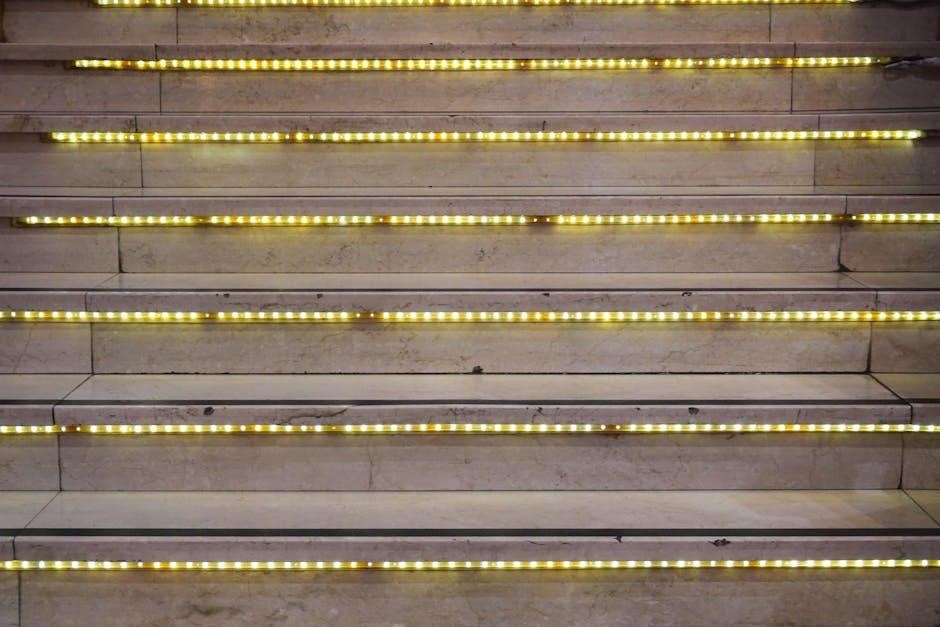
Waterproofing is vital, especially in bathrooms. Look for strips with an IP65 or higher rating to protect against moisture and splashes. Silicone coating offers excellent protection. Consider the voltage – 12V or 24V are common, requiring compatible power supplies. Think about the adhesive backing quality for secure attachment.
Gathering Necessary Tools and Materials
Preparation is key for a smooth installation. You’ll need the LED strips themselves, measured to fit your mirror’s perimeter. A suitable power supply, matching the strip’s voltage (typically 12V or 24V), is essential. Don’t forget the controller – remote or app-based – if you want color changing or dimming features.
Essential tools include: measuring tape, scissors or a cutter for trimming the strips, cleaning alcohol and microfiber cloths for surface preparation, and adhesive clips or mounting brackets for extra security. A wire stripper and screwdriver will be needed for power supply connections.
Safety first! Have electrical tape on hand for insulating connections. Consider a cable concealer to neatly manage wires. Finally, a step ladder might be necessary for reaching higher mirror placements.
Installation Process: Step-by-Step
Begin by cleaning the mirror surface thoroughly. Carefully adhere the LED strip, ensuring a secure bond. Finally, connect the strip to the power source, testing functionality.
Preparing the Mirror Surface for Adhesion
Proper surface preparation is crucial for a lasting and secure LED strip installation. Begin by thoroughly cleaning the mirror frame and the area where the strip will adhere. Use a glass cleaner to remove any dirt, dust, grease, or fingerprints.
Ensure the surface is completely dry before proceeding. A damp surface will compromise the adhesive’s effectiveness. For surfaces with lingering residue, isopropyl alcohol can be used, followed by another cleaning with glass cleaner and drying.
Consider lightly sanding the frame if it has a glossy finish; this creates a better grip for the adhesive. Wipe away any sanding dust before applying the strip. A clean, dry, and slightly textured surface guarantees optimal adhesion, preventing the LED strip from peeling or falling over time. This step significantly impacts the longevity of your installation.
Attaching the LED Strip to the Mirror (Back or Frame)
Carefully peel back a small section of the adhesive backing on the LED strip. Align the strip along the desired location on the mirror’s back or frame, typically 3-4 inches from the edge for a balanced look. Press firmly along the exposed adhesive to secure it.
Continue peeling and pressing in small sections, working your way around the mirror’s perimeter. Avoid stretching the strip during application, as this can damage the LEDs. If installing on the back, ensure sufficient space exists between the mirror and the wall to accommodate the strip and wiring.
For framed mirrors, the strip can be neatly concealed along the inner edge of the frame. Gently bend the strip to follow the frame’s contours. Avoid sharp bends that could damage the LEDs. A clean, precise application ensures a professional and visually appealing result.
Connecting the LED Strip to a Power Source
Locate the power connector on the LED strip and carefully connect it to the chosen power supply. Ensure the voltage of the power supply matches the LED strip’s requirements – typically 12V or 24V. Double-check polarity before connecting to prevent damage.
Plug the power supply into a suitable electrical outlet. Before fully securing the power supply, test the LED strip to confirm it’s functioning correctly. If using a remote or app-controlled system, follow the manufacturer’s instructions to pair the devices.
Conceal the power supply and any excess wiring for a clean aesthetic. Consider using cable management solutions like clips or channels. Never leave exposed wires, and ensure the power supply is protected from moisture, especially in bathroom environments.

Power and Control Options
LED strip control ranges from simple on/off switches to sophisticated remote and app-based systems. Choose a power supply matching your strip’s voltage and desired features.
Choosing a Power Supply (Voltage and Wattage)
Selecting the correct power supply is crucial for safe and optimal LED strip performance. Most mirror LED strips operate on 12V or 24V DC power, so ensure your power supply matches this voltage. Never use a higher voltage, as it will damage the LEDs.
Wattage calculation is equally important. Determine the total wattage required by multiplying the LED strip’s wattage per meter by its length. Always choose a power supply with a wattage rating at least 20% higher than your calculated total. This provides headroom and prevents overheating or premature failure.
Consider the power supply’s features. Look for options with short-circuit protection, overload protection, and potentially dimming capabilities if desired. A quality power supply will ensure a stable, reliable, and long-lasting lighting solution for your mirror.

Remote Control vs. App Control Options
Controlling your mirror LED strips offers convenience and customization; Remote controls provide a simple, direct way to adjust brightness, colors, and modes – ideal for quick adjustments without needing a smartphone. They’re user-friendly for all ages and require no setup beyond initial pairing.
App control, however, unlocks advanced features. Many LED strips connect via Bluetooth or Wi-Fi, allowing control through a dedicated smartphone app. This enables scheduling, music synchronization, scene creation, and often, integration with smart home ecosystems like Alexa or Google Assistant.
Consider your needs. If basic control is sufficient, a remote is perfect. For extensive customization and smart home integration, an app-controlled system is the better choice. Some systems even offer both options for maximum flexibility.
Dimming and Color Changing Capabilities
Mirror LED strips offer a spectrum of lighting possibilities beyond simple on/off functionality. Dimming capabilities allow you to adjust the brightness, creating subtle ambient lighting for relaxation or brighter illumination for tasks like makeup application. This flexibility enhances the mirror’s usability and mood-setting potential.
Color-changing LEDs, particularly RGB (Red, Green, Blue) strips, provide even greater customization. You can select from millions of colors to match your décor, mood, or personal preference. Many strips also feature dynamic modes like fading, flashing, or chasing effects.
Control options, whether via remote or app, dictate the extent of these features. App control often provides granular color selection and pre-programmed scenes, while remotes typically offer a limited palette of static colors and dimming levels. Consider your desired level of control when choosing your LED strip.
Troubleshooting and Safety
LED strip issues like flickering or non-illumination can often be resolved by checking connections and power supply. Always prioritize electrical safety during installation and maintenance.
Addressing Common Installation Issues
Adhesion problems are frequent; ensure the mirror surface is thoroughly cleaned with isopropyl alcohol before applying the LED strip. Stubborn dirt or residue prevents a strong bond. If the adhesive fails, consider using mirror-specific clips for added security.
Uneven lighting can occur if the strip isn’t applied consistently around the mirror’s perimeter. Maintain a uniform distance from the edge – 3 to 4 inches is generally recommended. Check for kinks or bends in the strip that might cause dark spots.
Power supply malfunctions are also common. Verify the voltage and wattage match the strip’s requirements. If the strip flickers or doesn’t illuminate, test the power supply with a multimeter; A faulty power supply needs replacement. Finally, ensure all connections are secure and properly insulated.
Safety Precautions When Working with Electricity
Always disconnect power at the breaker before beginning any electrical work. Never handle LED strips or power supplies with wet hands. Water and electricity are a dangerous combination, potentially leading to severe shock.
Use a Ground Fault Circuit Interrupter (GFCI) outlet, especially in bathrooms, to minimize the risk of electrical shock. Inspect all wiring for damage before connecting the power supply. Frayed or exposed wires pose a significant hazard.
Ensure the power supply is adequately rated for the LED strip’s wattage. Overloading the power supply can cause overheating and fire. Avoid running power cords under rugs or in areas where they could be damaged. If unsure about any aspect of the electrical installation, consult a qualified electrician.

Maintaining Your Mirror LED Strips
Regularly inspect your LED strips for any signs of damage, such as peeling adhesive or exposed wiring. Gently clean the mirror surface and LED strips with a soft, dry cloth to remove dust and debris. Avoid using harsh chemicals or abrasive cleaners, as these can damage the LEDs or the mirror’s finish.
If the adhesive begins to fail, carefully re-secure the strips with appropriate adhesive tape designed for LEDs. Check the power supply connections periodically to ensure they remain secure and free from corrosion. If you notice flickering or dimming, inspect the power supply and wiring for issues.
For RGB strips, test the color changing functions regularly to ensure all colors are functioning correctly. Proper maintenance will extend the lifespan and maintain the beautiful illumination of your mirror LED strips.